A Forgotten Gift
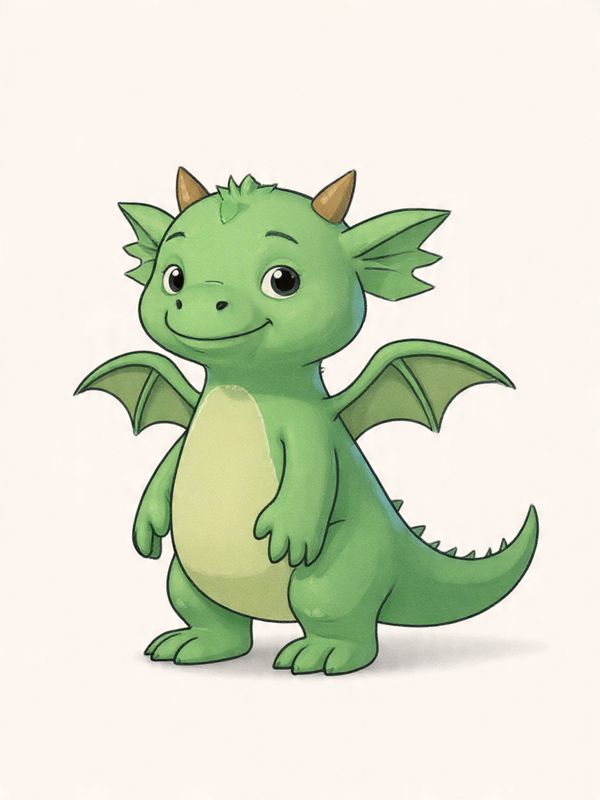
Fennel sat on his porch watching the sunset paint the Valley in shades of amber and rose. Chirp was perched on the railing beside him, both of them quiet in that comfortable way old friends can be. Fennel’s wings were folded neatly against his sides, his tail curled around his feet.
“Do you remember,” Fennel said suddenly, “how we first met?”
“Chirp chirp!” Chirp said, which clearly meant of course I remember, you silly dragon.
“I was trying to draw the wildflowers in the meadow,” Fennel continued, using one clawed hand to gesture at the memory. “I’d found colored clays and I was making marks on a flat stone, trying to capture how the light fell through the petals. Trying to show what I saw.” He flexed his fingers — such useful hands, with opposable thumbs that let him hold things properly. “And you landed right in the middle of my drawing.”
Chirp ruffled his feathers, remembering. He’d been curious about what this strange green creature was doing, hunched over a stone making careful marks with different colored clays. Most animals didn’t bother with such things. But this dragon was trying to capture beauty, to preserve a moment, to show what he saw.
“I haven’t drawn anything in months,” Fennel said quietly. “Not since we built the house. I’ve been so busy with everything else. But I miss it. That feeling of seeing something beautiful and wanting to remember it exactly as it is.”
“Chirp?” Chirp asked, tilting his head.
“I don’t know why I stopped,” Fennel admitted. “I suppose I thought it wasn’t important. Not like building things or teaching things or fixing things. It’s just… drawing. What good does that do anyone?”
Baxter’s Question
The next morning, Baxter came to visit. The raccoon had a particular expression that Fennel had learned to recognize—the one that meant he’d been thinking about something and had come to discuss it.
“I’ve been praying about the village,” Baxter said, settling into a chair on the porch, his ringed tail curling behind him. “About Mrs. Thompson and some of the others we met. There are more people there”and some animals too”who don’t know their stories.”
“Their stories?” Fennel asked.
“Where they fit in God’s story. Where they came from, who they are, why they matter. Many of them can’t read, you see. They’ve heard bits and pieces at meeting, but they don’t know the whole narrative. Creation, the Fall, the Flood, the Patriarchs, the Exodus, the Prophets, Jesus, the Church. They don’t know how it all fits together.”
Fennel nodded slowly. “O.T. knows all of it. He could teach them.”
“He could recite it,” Baxter agreed. “And he does, beautifully. But recitation isn’t the same as understanding. People need to see it, to grasp it visually. They need…” He paused, looking at Fennel thoughtfully. “They need someone to show them.”
“Show them how?”
“I don’t know yet,” Baxter said. “But I think God is stirring something. Keep your eyes open.”
O.T. and the Bigger Picture
That afternoon, Fennel found himself at the clearing near the Great Oak Tree where O.T. often went to think. The blue elephant was there, as expected, his trunk curled thoughtfully as he gazed out over the Valley.
“O.T.,” Fennel called out, spreading his wings briefly before landing. “Can I ask you something?”
“Of course,” O.T. said, turning his great head. “What troubles you?”
“Not troubles exactly. More like… questions. Baxter mentioned that people in the village don’t know their stories. That they don’t understand how everything fits together.”
O.T.’s ears flicked forward with interest. “That’s very true. I’ve noticed the same thing. When I recite the genealogies or the timeline of judges, I can see their eyes glazing over. They hear the words but don’t grasp the meaning. The connections between events, the patterns, the way God works through history”it’s all there in Scripture, but they can’t see it.”
“How did you learn to see it?” Fennel asked.
“By studying it over years. Decades, really. I can hold the entire narrative in my mind at once”Creation to Christ to today. I see how Abraham connects to Moses, how Moses points to the Prophets, how the Prophets point to Jesus. But most people can’t do that. Their minds don’t work that way.”
Fennel sat down beside the elephant, his tail swishing thoughtfully. “What if… what if there was a way to show it? Visually, I mean. So they could see the connections even if they can’t hold it all in their minds at once?”
O.T. turned to look at him fully. “What do you mean?”
“I don’t know exactly,” Fennel admitted. “But when I draw something”when I capture it visually”I understand it differently than when someone just tells me about it. I can see the relationships, the patterns, the way things fit together.”
“You draw?” O.T. asked with interest.
“I used to. It’s how Chirp and I first met”I was drawing wildflowers in the meadow. But I haven’t in a long time. I thought it wasn’t important.”
O.T. was quiet for a long moment. “According to Exodus 31,” he said finally, “God gave specific artistic gifts to Bezalel and Oholiab to build the Tabernacle. He filled them with skill, intelligence, and knowledge in every kind of craft. Their art wasn’t frivolous”it was how they served God and helped people worship Him. The visual beauty of the Tabernacle taught theological truths.”
Fennel felt something stirring in his chest. “So art can… it can teach?”
“Of course it can,” O.T. said. “Images carry meaning that words sometimes can’t. The prophets used visual signs all the time”Ezekiel lying on his side, Hosea marrying an unfaithful woman, Jeremiah buying a field. God speaks through what can be seen, not just what can be heard.”
“Then maybe…” Fennel’s mind was racing now. “Maybe we could work together. You know the stories. I could draw them. We could show people the whole narrative visually.”
O.T.’s trunk lifted with excitement. “Yes. Yes, that could work. But Fennel”we’d need more than just drawings. We’d need them preserved properly, organized clearly, made durable enough to last and be shared.”
“That’s where Abe comes in,” said a voice from above. They both looked up to see the orangutan hanging from a branch of the Great Oak, grinning down at them. “I couldn’t help but overhear. You’re talking about creating something, aren’t you? Something that needs to be built?”
Making Paper — and a Plan
Within a week, the three of them had gathered at Fennel’s house to discuss the idea properly. Abe had brought tools and materials. O.T. had brought his vast knowledge. Fennel had reluctantly brought out some of his old drawings”rough sketches on stones and bark, images of flowers and animals and the Valley landscape.
“These are good,” Abe said, examining them carefully. “You have real skill. But stone and bark won’t work for what we’re talking about. They’re too heavy, too fragile. We need something better.”
“Paper,” O.T. suggested. “Made from plant fibers”bark, reeds, cotton. Ancient civilizations discovered various methods. The Chinese used bamboo and mulberry bark. Medieval Europeans used cotton and linen rags. It’s durable, portable, and holds detail well.”
“Can we get paper in the village?” Fennel asked.
“We can make it,” Abe said confidently. “But we’ll need the right equipment.”
“I can design a paper-making system,” O.T. said, his trunk gesturing as he thought aloud. “According to traditional methods, you need a way to pulp the fibers, screens to form the sheets, and pressing boards to remove water. But the traditional process uses some harsh chemicals to break down the plant material”lye or lime”and produces quite a smell.”
“There must be a better way,” Fennel said, thinking of the Valley’s clean streams and pure air.
“What if…” Abe said slowly, his hands moving as he considered the problem. “What if we could break down the fibers mechanically instead of chemically? Pound them, grind them fine. It would take longer, but""
“But it would be clean,” O.T. finished. “No chemicals, no smell. Just plant fibers, water, and work.”
“I can help with that,” Fennel said suddenly. An idea was forming. “My fire breath”what if I could use it to soften the fibers first? Not burn them, just gentle heat to make them more pliable. And then my ice breath could help with the drying process. Freeze out the water quickly so the paper sets smooth.”
Abe’s eyes lit up. “That could work. And if the fibers are heat-softened, they’ll pulp much easier with mechanical grinding. O.T., can you design the equipment?”
“A water-powered grinding mill for the pulping,” O.T. said immediately, his perfect memory already accessing stored knowledge. “We can build it by the stream. Then flat screens for forming the sheets”woven reeds would work. And a simple press to squeeze out excess water before Fennel’s ice breath finishes the drying.—
Over the next few weeks, the three of them worked together in a rhythm that felt almost choreographed. O.T. designed each piece of equipment, explaining the principles and proportions. Abe built them, making quick work of the construction, adjusting and improving O.T.’s designs as he went. And Fennel tested each stage of the process, learning to control his fire breath for gentle, sustained warmth and his ice breath for rapid, even cooling.
The result was paper-making that was completely clean—no chemicals, no unpleasant smells, just plant fibers transformed through water, pressure, and Fennel’s unique abilities. The paper they produced was smooth, strong, and held pigments beautifully.
“This is better than I hoped,” O.T. said, examining their first successful sheets. “And we’ve created something sustainable. Any community could replicate this process if they have access to plant materials and water.”
“Though the dragon breath does help,” Abe added with a grin. “Makes you pretty essential to the operation, Fennel.”
Fennel looked at the sheets of paper drying on racks”paper he’d helped create through gifts he was still discovering how to use. “I think that’s the point,” he said quietly. “God made me this way for a reason. The art is part of it. But so is this”using what I can do to help create something beautiful and useful.”
Fennel practiced with different materials, learning how his hands could hold brushes made from plant fibers, how pressure and angle affected the marks he made.
Baxter visited often, offering pastoral guidance. “Remember,” he said one evening as they all gathered on Fennel’s porch, “this isn’t just about making pretty pictures. It’s about serving people who need to know God. Every image should point toward Him.”
“What should we start with?” Fennel asked.
O.T. considered. “The beginning. ‘In the beginning, God created the heavens and the earth.’ If they don’t understand Creation, they won’t understand anything that comes after.”
“Can you show me?” Fennel asked. “Not just tell me”show me how you see it in your mind?—
O.T. closed his eyes. “I see… darkness. Formless void. Then light breaking through”not from a source, but God Himself speaking it into existence. Then separation—light from dark, waters above from waters below, sea from land. Then filling”sun and moon, birds and fish, animals and finally humans. Each day building on the last, each act purposeful, deliberate, good.”
As O.T. spoke, Fennel’s hands moved almost unconsciously, sketching rough outlines in the air. He could see it”not just imagine it, but see it as a visual sequence. Seven panels, each showing a day of Creation, building from darkness to the glory of the seventh day.
“I need paper,” he said suddenly. “And paint. Abe, is any of it ready?”
“Some,” Abe said. “Enough to start. But Fennel”this is going to take time. Real time. You can’t rush art.”
“Then we take the time,” Baxter said firmly. “This matters too much to hurry.”
The Work Begins
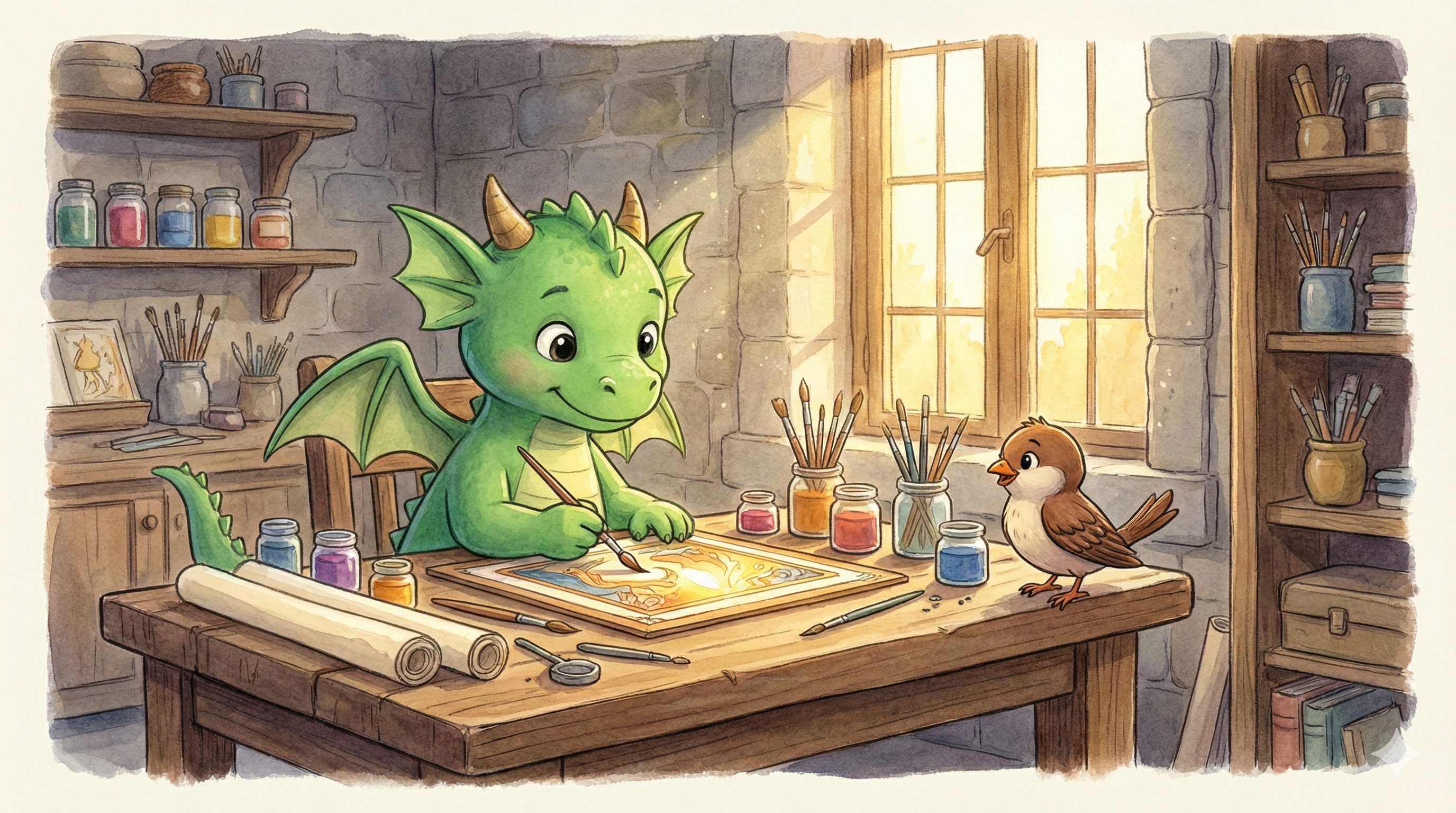
The work consumed Fennel for the next month. He would wake before dawn, pray, and then begin painting. His hands proved perfectly suited for the detailed work—the opposable thumbs letting him control the brush with precision, his retracted claws never interfering. Chirp stayed with him, often perching nearby and watching the images emerge.
O.T. visited daily, describing the theological depths of each moment in Creation while Fennel translated them into visual form. Abe built a workshop space behind Fennel’s house, creating frames and preparing sheets of paper and mixing pigments from minerals and plants.
When the Creation panels were finally complete, they invited the others to see them.
Baxter arrived first, followed by Stickles (who had been quietly observing their progress from a distance), then Stanley, then several animals from the village who’d heard about the project.
Fennel had arranged the seven panels in sequence along the walls of his home. As people moved from one to the next, he watched their faces change from curiosity to wonder to awe.
The first panel showed pure darkness—deep and formless. But in the center, the faintest suggestion of light beginning to break through, with text below: “And God said, ‘Let there be light.’”
Each subsequent panel built on this—waters separating, land appearing, vegetation sprouting, celestial bodies hung in the heavens, creatures filling sea and sky and land, and finally humans formed from dust and breath, bearing God’s own image.
The seventh panel showed rest”not emptiness, but Sabbath peace. The work complete. The goodness affirmed. God dwelling with His creation.
“It’s beautiful,” Mrs. Winters from the village whispered. “I’ve heard the Creation story my whole life, but I never saw it like this. Never understood that it was building toward something”toward us, toward the Sabbath, toward God being with us.”
Stickles had been studying the panels carefully, moving slowly from one to the next. “You captured something I noticed but never had words for,” he said. “The progression. Each day isn’t random”it prepares for the next. God creates light before He creates things that need light. He creates plants before He creates animals that eat plants. It’s all so… intentional.”
“That’s exactly right,” O.T. said, his trunk gesturing at the panels. “God doesn’t create chaos. He creates cosmos”ordered, purposeful, beautiful. And Fennel’s images show that in a way my recitation never could.”
Stanley padded over to Fennel. “How do you feel?” he asked gently.
Fennel realized he was trembling slightly. “Overwhelmed,” he admitted. “And… and grateful. I thought drawing was just something I did for myself. A small thing. But this…” He looked at the panels. “This is worship. This is serving. This is using what God gave me to help others know Him.”
“Exactly,” Baxter said. “Now, what comes next?”
The Creation Panels
What came next was the Flood. Then Abraham. Then Moses and the Exodus. Then the Judges. Then the Kings. Each narrative sequence became a new set of panels, each one requiring O.T.’s knowledge, Fennel’s artistry, and Abe’s technical skill.
As the collection grew, something else happened: other animals wanted to help.
Stickles began gathering materials—the right plants for pigments, the perfect reeds for brushes. His careful observation skills meant he always found exactly what was needed.
Mrs. Winters and some of the village women learned to prepare paper under Abe’s direction, expanding their capacity.
Stanley started organizing visits to the workshop, bringing small groups who could ask questions and learn the stories as Fennel painted them.
Cedar, a quiet fox who rarely spoke, turned out to have beautiful handwriting and began adding the Scripture references and short explanations to each panel.
The ministry was growing beyond the three who started it. Each person found a way to contribute, using their own gifts to support the larger work.
Six months into the project, Baxter called a meeting.
“We need to talk about what this is becoming,” he said. “It’s not just Fennel’s art anymore. It’s a community endeavor. A ministry. And it needs a name and a purpose.”
“The purpose is clear,” O.T. said. “We’re teaching God’s story visually for those who can’t read or who learn better through images.”
“The Visual Gospel,” Stickles suggested quietly. “Showing the good news, not just telling it.”
“I like that,” Fennel said. “But it should be clear that it’s not replacing Scripture. The images serve the Word, not the other way around.”
“What about the Illustrated Word?” Abe offered. “Makes it clear we’re illuminating Scripture, helping people see what’s already there.”
They settled on that. The Illustrated Word would create visual teaching materials—primarily for the village and valley communities, but potentially for anywhere people needed to see God’s story more clearly.
“We need a place,” Baxter said. “Fennel, your home has been generous, but we need dedicated space. A workshop and teaching space combined.”
“There’s an old barn near the village,” Mrs. Winters said. “Hasn’t been used in years. The owner might donate it if she knew what it was for.”
Within two weeks, the barn had been transformed. Abe built proper workstations and storage for materials. Fennel set up his painting area near the large windows where the light was best. O.T. created a library space for his scrolls and notes. And in the center, they built a teaching area where the completed panels could be displayed and explained.
The first official teaching session drew over fifty animals and people from the village.
O.T. narrated while Fennel’s panels were revealed one at a time. People gasped at the Flood. They wept at Abraham nearly sacrificing Isaac. They cheered when Moses parted the Red Sea. They sat in stunned silence at the panel showing Jesus on the cross.
After the session, an elderly rabbit approached Fennel. “I’m seventy-three years old,” she said. “I’ve been coming to meeting my whole life. I knew the stories, but I never understood how they fit together. Tonight, I saw it. God has been working toward Jesus since the very beginning. It’s all one story. His story.”
Fennel felt his eyes burning. This was why God had given him hands that could draw. Not for his own pleasure—though there was pleasure in it—but for this. For helping people see.
The Ministry Grows
As the work continued, something unexpected happened.
Fennel was working late one evening, alone in the workshop except for Chirp. He was painting a panel of the Transfiguration—Jesus revealed in glory, with Moses and Elijah beside Him. He was trying to capture the light, the overwhelming brightness that the disciples witnessed.
He breathed gently, using his fire breath to warm his hands which had gotten cold as evening deepened. As he breathed, something strange happened.
The paint on the panel began to glow.
Not just reflect light—actually glow, as if lit from within.
Fennel stopped breathing and stared. The glow faded. He breathed fire again, very carefully, and the glow returned.
“Chirp!” he whispered urgently. “Are you seeing this?”
“Chirp chirp!” Chirp confirmed, eyes wide.
Fennel tried breathing ice instead. This time, the paint seemed to crystalize slightly, adding texture and depth without changing the image.
“It’s me,” he whispered. “It’s… it’s magic. Dragon magic. I didn’t know I could do this.”
He spent the next hour experimenting, learning that his fire breath could make certain colors luminous—golds, reds, whites”while his ice breath could add dimension to blues, silvers, greens. The effect was subtle but powerful. The panels became more than just painted images. They became something alive, something that drew the eye and held it.
When he showed Baxter the next day, the raccoon was quiet for a long time.
“You’ve been given an extraordinary gift,” he said finally. “But Fennel”this is powerful. It could be manipulative if misused. People might focus on the magic rather than the message.”
“I know,” Fennel said. “That’s why I wanted your guidance. Should I use it at all?”
Baxter considered. “God gives gifts to be used. But they must serve Him, not ourselves. Use it sparingly. Use it only where it genuinely helps people see the truth more clearly. The Transfiguration”yes, that should shine. The Resurrection”absolutely. But not everything. Most panels should stand on their own skill and truth.”
Fennel nodded. “I understand.”
A Discovery in the Workshop
A year after the project began, The Illustrated Word had become a fixture in the Valley community. The workshop ran teaching sessions twice a week. Children came to watch Fennel paint and ask O.T. questions about the stories. Abe taught a carpentry class on the side, training others to build frames and prepare materials. Stickles led nature walks to gather supplies, teaching people to observe and appreciate God’s creation. Stanley was always present, offering listening ears and warm comfort to anyone who was struggling with what they learned.
Baxter provided pastoral oversight, ensuring the theology stayed sound and the ministry stayed focused on Jesus.
And people were coming to faith. Not because of magic or manipulation, but because they could finally see the whole story. They could see God’s faithfulness through generations. They could see how every piece pointed to Christ. They could see themselves in the narrative—fallen but loved, lost but sought, dead but offered life.
One evening, as Fennel was finishing a panel of the Early Church at Pentecost, he paused to look around the workshop. It was empty now, everyone gone home for the night except Chirp.
“We did it,” he said quietly. “We found what I’m supposed to do. Not just draw for myself, but draw for others. Show them who God is. Help them see.”
“Chirp chirp,” Chirp agreed, settling onto Fennel’s shoulder.
Fennel looked down at his hands—these useful, capable hands with their opposable thumbs. Hands that could wield a brush, blend colors, capture light and shadow and meaning. Hands that God had given him for this exact purpose.
He thought about his wings, currently folded but always ready to carry him where he needed to go. His fire and ice breath that added wonder to the most glorious moments. His impervious scales that let him work for hours without worry. Even his tail, which he’d always thought was just something to be careful of, served him now”he could use it to steady himself, to point at things, to express emotion while his hands were busy.
Every part of how God made him was useful. Every gift had a purpose.
“Thank you,” he prayed quietly. “For making me this way. For giving me this gift. For showing me how to use it. Help me to never forget that it’s not about me”it’s about pointing others to You. Help me to use these hands, these abilities, this art always for Your glory. Amen.”
“Chirp,” Chirp said softly, which Fennel understood to mean Amen, and thank you for letting me be part of it.
Through the workshop windows, stars were beginning to appear over the Valley. Tomorrow would bring more work—more stories to tell, more images to create, more people to serve. The Illustrated Word would continue, growing and evolving as God led.
But tonight, Fennel simply sat in the quiet workshop, grateful to know who he was and what he was made for.
A dragon with hands that could draw. A creature with wings that could fly and fire that could illuminate and ice that could add beauty. An artist whose gift was given not for his own glory but for God’s.
And that was exactly who he was meant to be.
Using Every Gift
The End
“Having gifts that differ according to the grace given to us, let us use them.” - Romans 12:6