Storm Signs
The wind started just after breakfast.
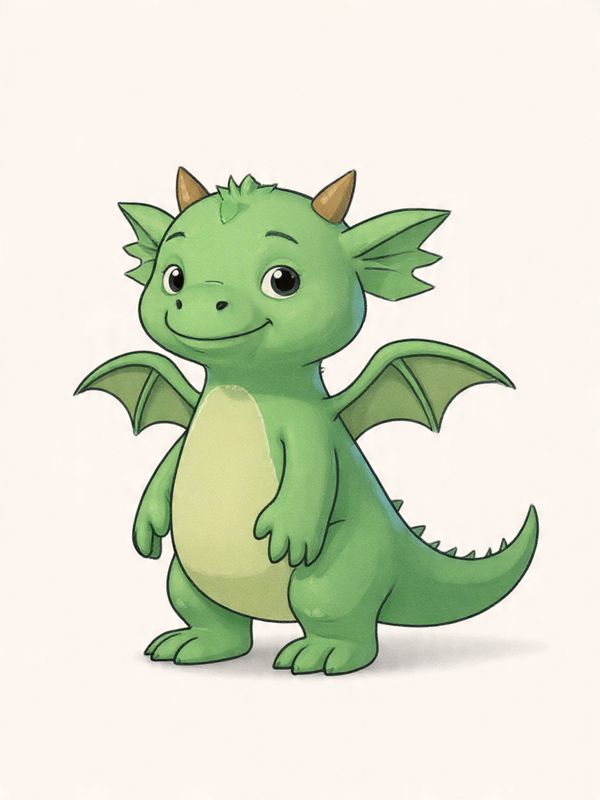
Fennel the dragon was sitting by the stream, watching water striders skate across the surface, when the first gust arrived. It wasn’t strong—just enough to ruffle his green scales and make Chirp the sparrow grip his shoulder a little tighter. But it felt different from the usual valley breezes. This wind had purpose, like it was going somewhere and didn’t care what stood in its way.
“Chirp?” said Chirp, sounding uncertain.
“I feel it too,” Fennel murmured.
The sky had changed overnight. Yesterday it had been the clear blue of late summer, the kind that made you want to lie in the meadow and watch clouds drift by. But this morning, the sky was the color of old pewter, heavy and low. The clouds moved fast, churning like they were being stirred by an enormous invisible spoon.
Fennel heard someone coming through the grass behind him. He turned to find Baxter the raccoon approaching, his walking stick in one paw and an unusually serious expression on his face.
“Storm’s coming,” the raccoon said without preamble. “A big one. I can feel it in my bones, and my grandmother taught me to read weather signs. See how the birds are flying?”
Fennel looked up. The birds—not just sparrows but crows and jays and even a hawk—were all heading west, away from wherever the storm was coming from. They flew in straight lines, not their usual wandering patterns. Purposeful. Urgent.
“What do we do?” Fennel asked.
“We prepare,” Baxter said. “And we make sure everyone in the Valley is ready. Some of our friends have homes that are… less sturdy than others. We need to make sure everyone has somewhere safe to wait out the storm.”
Another gust of wind came, stronger this time. It bent the willow trees and sent leaves skittering across the ground. In the distance, Fennel heard the first rumble of thunder—low and deep, like a giant clearing his throat.
“Let’s go,” Fennel said, standing quickly. “Who do we check on first?”
Checking on Friends
They found Stickles in his hollow beneath the pine tree, already securing his shutters. His quills were standing more upright than usual—not from anger but from anxiety. The wind was getting stronger by the minute, and small branches were beginning to fall from the trees above.
“I heard the weather warnings from the crows this morning,” Stickles said, his paws trembling slightly as he worked on the last shutter. “They said it’s going to be bad. Really bad.”
“Your hollow is underground,” Baxter observed, examining the entrance. “The roots above will hold. But you’ll want to seal the door well—heavy rain can flood even underground spaces if water finds a way in.”
“I have clay,” Stickles said. “From the riverbank. I can seal the gaps.”
“Good,” Baxter said. “But Stickles—if it gets too frightening, if water starts coming in, don’t stay here alone. Come to my den. It’s stone, built into the hillside. Very solid. There’s room for all of us if needed.”
Stickles nodded, but Fennel could see the worry in his eyes. The porcupine didn’t like change, didn’t like uncertainty. The thought of his safe hollow flooding, of having to leave in the middle of a storm…
“We’ll check on you,” Fennel promised. “You won’t be alone.”
“Chirp chirp,” Chirp added firmly.
They helped Stickles finish sealing his shutters and door, then moved on. The wind was constant now, no longer gusting but blowing hard and steady from the east. The temperature had dropped too. What had been a warm morning now felt like autumn arriving all at once.
O.T. was at the old oak grove, using his trunk to secure Abe’s workshop. The orangutan was inside, hammering boards across the windows with quick, efficient movements.
“Storm shutters,” Abe called down. “Built them last spring but never needed them until now. Good thing I prepare for contingencies.”
“Very wise,” O.T. said. His large ears were pressed back against his head, and his blue skin looked almost gray in the strange storm light. “My grandmother experienced a hurricane in 1843. She said the key was securing loose objects and finding shelter on high ground away from trees that might fall. This grove is risky—these oaks are old and their roots may not hold in saturated soil.”
“Already thought of that,” Abe said, climbing down and landing nimbly despite the wind. “Once this is secure, I’m heading to Baxter’s den. Stone walls, good drainage, high enough to avoid flooding but low enough to avoid lightning strikes.”
“Smart,” Baxter approved. “That’s where we’re gathering. O.T., will you help me spread the word? We need everyone to know they have shelter available.”
“My memory tells me there are seventeen households in the Valley,” O.T. recited. “Fourteen are structurally sound for major storms. Three are vulnerable: Stickles’ hollow due to potential flooding, the Miller family’s cottage near the stream for the same reason, and old Hedge’s burrow in the exposed hilltop where wind damage is likely. We should prioritize those three.”
The thunder came again, closer this time. The first drops of rain began to fall—fat, cold drops that hit hard enough to sting.
“We need to move,” Baxter said. “Fennel, can you and Chirp check on the Millers? O.T., head to Hedge’s burrow. Abe and I will make sure everyone else knows they’re welcome at the den. We meet there in one hour, before this gets worse.”
They scattered into the growing storm.
The Millers Need to Move
The Miller family—a beaver couple with three young kits—lived in a cottage right beside the stream. It was a beautiful spot in good weather, with the sound of running water and easy access for swimming. But as Fennel approached, he could see why Baxter was worried. The stream was already rising, swollen with rain from wherever the storm had started upstream. Brown water churned and frothed, climbing up the banks toward the cottage door.
Mrs. Miller was outside, trying to move bundles of cattail reeds to higher ground while the kits huddled in the doorway, their eyes wide with fear.
“Mrs. Miller!” Fennel called over the wind. “You need to leave! The water’s rising!”
“Our winter stores!” she called back. “The reeds for repairs! We need them!”
“You need to be safe first!” Fennel said, splashing into the shallow water that was now spreading across their yard. “Baxter has space for everyone at his den. It’s stone, it’s dry, it’s safe. Come now, before the water gets deeper!”
Mr. Miller appeared from inside, carrying two of the kits. “She’s right, dear! We have to go now!”
Mrs. Miller looked at her reeds, at her cottage, at the rising water. Then she nodded sharply, scooped up the third kit, and turned away from her home. “Lead us,” she said to Fennel.
They hurried through the Valley as the rain intensified. It was coming sideways now, driven by the wind that howled through the trees. Branches cracked overhead. Lightning flashed, close enough that the thunder came almost instantly—a crack that made them all flinch.
“Almost there!” Fennel called, his voice nearly lost in the storm’s roar.
Baxter’s den appeared ahead, warm light glowing from the windows. The raccoon himself stood in the doorway, waving them in urgently. They tumbled inside, dripping and breathless, and Baxter slammed the heavy wooden door shut behind them.
Shelter Together
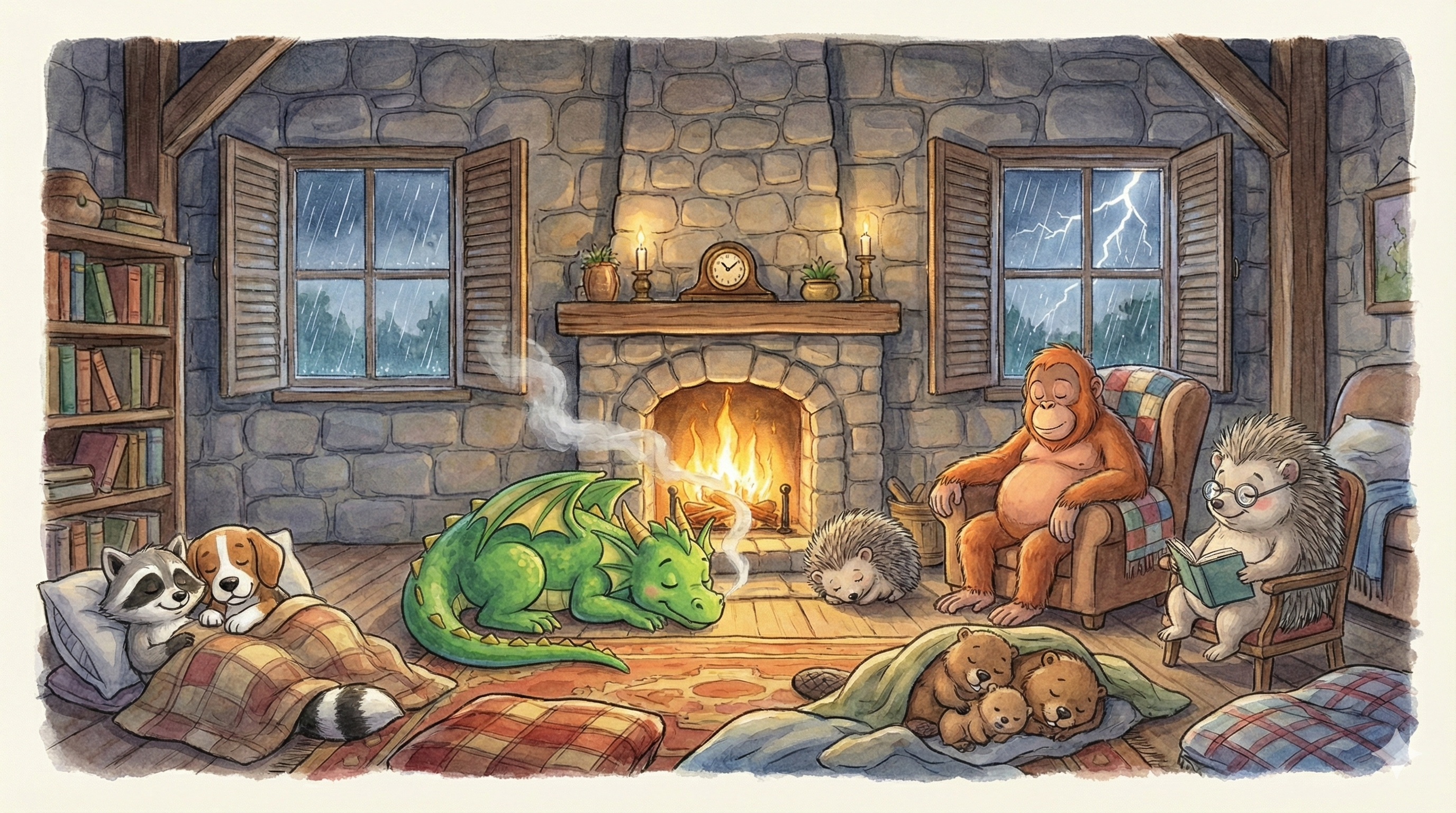
The den was already filling with Valley residents seeking shelter. Fennel saw O.T. in the corner with old Hedge, the elderly hedgehog wrapped in a blanket and sipping something warm. Abe was securing the shutters from the inside. Stanley sat near the fireplace with several younger animals who looked frightened, his calm presence helping them stay steady.
“Everyone’s accounted for,” Baxter announced, checking a mental list. “Seventeen households, forty-three souls, all safe.” He turned to the group. “The storm will pass. These things always do. But tonight, we wait together. My den is your den. There’s food in the pantry, blankets in the chest, and enough room if we’re friendly about it.”
As if to emphasize his point, the storm unleashed its full fury. Wind screamed around the den’s stone walls. Rain hammered the roof like a thousand tiny hammers. Lightning lit up the shuttered windows in bright white flashes, and thunder shook the ground.
One of the Miller kits whimpered. Stanley immediately moved closer, his round beagle body providing comfort. “It’s loud,” he acknowledged gently, “but we’re safe in here. These walls are strong. Baxter chose well when he built this place.”
“My grandfather built it,” Baxter said, bringing cups of chamomile tea to those who wanted them. “He said a good den should be able to withstand anything the weather brings. I think he’d be pleased to see it sheltering so many tonight.”
Stickles sat near the fire, his quills still rigid with anxiety. He kept glancing at the door, as if calculating whether he should have stayed in his hollow after all. Fennel moved to sit beside him.
“Your hollow will be fine,” Fennel said quietly.
“You don’t know that,” Stickles replied, his voice tight.
“No,” Fennel admitted. “I don’t. But I know you’re here, safe and dry, surrounded by friends. That’s what matters most.”
“My pressed flowers,” Stickles whispered. “The ones on my walls. What if water gets in? What if they’re ruined?”
Before Fennel could answer, O.T. spoke up from across the room. “My grandmother preserved flowers for seventy years. She said the key was keeping them in sealed frames away from moisture. If you sealed your frames properly—and knowing you, you did—they’ll survive even significant humidity. But Stickles, even if they don’t…” The blue elephant paused. “You can press more flowers. You can’t replace yourself.”
Stickles was quiet for a moment, then nodded slowly. “You’re right. Thank you.”
The storm raged on. Hours passed. Baxter lit more lamps as the day darkened early, the thick clouds blocking what little sunlight remained. Abe organized a group to prepare dinner from Baxter’s stores—a simple soup, but hot and filling. Mrs. Miller told stories to the kits, keeping their minds off the storm. O.T. recited poetry about weathering hard times and trusting in providence.
And through it all, Stanley moved quietly among them, checking on those who seemed most anxious, offering his steady presence to anyone who needed it.
The Long Night
Night fell, though it was hard to tell—the sky had been dark for hours already. The storm showed no signs of stopping. If anything, it seemed to be getting stronger. The wind howled like a living thing trying to get inside. Trees crashed down in the distance, the sound unmistakable even over the general roar.
“Should we sing?” Abe suggested during a lull in the thunder. “Seems better than just sitting here being nervous.”
“What should we sing?” one of the beaver kits asked.
“Something about storms,” Fennel said suddenly. “Something that reminds us God is bigger than the wind.”
Baxter smiled. “I know just the one.”
He began to sing in his warm, steady voice:
“He who keeps the stars in place, Who holds the sea within its space, Who commands the wind and rain, Will keep us safe through storm and strain.”
Others joined in, their voices rising together. Even those who didn’t know all the words hummed along, creating a sound that pushed back against the storm’s fury. It wasn’t louder than the wind. But it was something else—something that said we are here, we are together, we are not afraid.
Well, they were afraid. Fennel could admit that. He was afraid the Valley would be destroyed. Afraid someone’s home would be ruined. Afraid the stream would flood and wash away familiar landmarks. Afraid of the darkness and noise and the way the earth itself seemed to shake with each thunder crack.
But he was also not alone. And somehow that made all the difference.
“Fennel?” Chirp said quietly, nestled against his neck.
“I know, friend,” Fennel whispered back. “I’m scared too. But look around. We’re all here. Everyone we love, all in one place, all safe.”
“Chirp chirp,” Chirp agreed, and pressed closer.
What the Storm Taught
Midnight came and went. Some of the younger animals fell asleep, exhausted by fear and soothed by the warmth of the fire and the presence of so many safe adults. The storm continued its assault on the Valley, relentless and powerful.
Fennel found himself sitting with Baxter near the fire, watching the flames flicker with each gust that found its way down the chimney.
“Have you ever seen a storm this bad?” Fennel asked.
“Once,” Baxter said. “When I was very young, younger than you. My parents’ den flooded, and we had to climb to higher ground in the middle of the night. I remember being terrified. I remember my father carrying me through water that was up to his chest. I remember thinking the whole world was ending.”
“What happened?”
“The storm passed,” Baxter said simply. “Morning came. The water receded. We rebuilt what was lost. The Valley survived. Life continued.” He paused. “That’s what these storms teach us, I think. That everything feels permanent when you’re in the middle of it—the fear, the darkness, the chaos. But God’s world is resilient. He built it to bend in the wind, not break. To absorb the rain, not be destroyed by it.”
“But things do break sometimes,” Fennel said, thinking of Stickles’ possible hollow, of the trees falling in the woods, of the unknown damage waiting outside.
“Yes,” Baxter acknowledged. “Sometimes things break. Sometimes loss is real. But even then—even when we lose things we treasure—we’re not lost ourselves. We have each other. We have God’s promises. We have the capacity to rebuild.”
Thunder crashed overhead, so loud it rattled the cups on the shelves. But inside the den, surrounded by friends, Fennel felt something settle in his chest. Not the absence of fear. But something steadier beneath the fear. Trust, maybe. Or faith. The certainty that no matter what waited outside, they would face it together.
Morning After
Sometime in the darkest part of the night, the wind began to ease.
Not all at once. Gradually. Like something exhaling after holding its breath too long. The rain continued, but softer now. The thunder moved off to the west, its voice fading.
“It’s passing,” O.T. announced, his large ears swiveling. “The worst is over.”
No one rushed to open the doors. They waited, letting the storm finish its exit, making sure it was truly gone before venturing out. Finally, as the first gray light of dawn began to seep around the shutters, Baxter stood and unbarred the door.
The door swung open to reveal a world transformed.
The Valley was soaked, water standing in pools everywhere. Branches and leaves covered the ground like a thick carpet. Several trees had fallen—Fennel could see them in the distance, their root balls torn from the earth. The stream had overflowed its banks and was still running high and brown.
But the wind was gentle now. The rain had stopped. And somewhere above the clouds, the sun was rising.
They emerged slowly, quietly, looking at what the storm had done. Mrs. Miller gasped when she saw her cottage—water had come within inches of the door but stopped there, receding as the rain ended. Her precious reeds were scattered but not lost.
“We need to check on everyone’s homes,” Baxter said. “See what needs repair.”
They spread out through the Valley, Fennel’s heart in his throat as they approached Stickles’ hollow. The porcupine walked slowly, clearly terrified of what he might find.
The pine tree still stood, strong and whole. The hollow’s door was intact, though surrounded by puddles. Stickles opened it carefully and peered inside.
“Dry,” he breathed. “Completely dry. The clay seal held. My flowers…” He disappeared inside and came back out holding a pressed daisy in its frame, perfectly preserved. “They’re fine. Everything’s fine.”
Relief made Fennel’s legs weak. Chirp did a little flip in the air, chirping joyfully.
They checked Abe’s workshop—shutters held, structure sound. O.T.’s place, wherever he lived—undamaged. The meadow was muddy but recovering already, water soaking into the earth. The old stone bridge had weathered the flood without even noticing it.
The Valley had survived.
There was work to do, certainly. Fallen trees to clear. Gardens to repair. Mud to clean up. But everyone was safe. Every home was standing. The storm had roared through like a terrible giant, but it had not broken them.
Evening Around the Fire
That evening, as the sun set clear and golden over a washed-clean Valley, they gathered again—this time outside, in Baxter’s yard. Someone had brought bread. Someone else brought honey. They shared a simple meal in the fresh air, grateful to be together, grateful to be safe, grateful for the storm’s passing.
“Thank you,” Mrs. Miller said to Baxter. “For opening your home. For keeping us safe.”
“That’s what homes are for,” Baxter replied. “To shelter those who need it. I’m grateful my grandfather built something that could hold us all.”
“To strong walls,” Abe said, raising his cup of cider.
“To good friends,” Stanley added.
“To God’s protection,” O.T. said solemnly.
“To being together,” Fennel said, feeling Chirp settle against his neck with a contented sigh.
They drank and ate and watched the stars come out—stars that had been there all along, even when hidden by clouds. The Valley settled into its evening sounds: crickets singing their relief, frogs celebrating the abundance of water, wind moving gently through trees that had bent but not broken.
Stickles sat close to the fire, his pressed flowers safe back on his walls, his hollow dry and whole. “I was so afraid,” he admitted to the group. “Afraid of losing everything.”
“But you didn’t lose everything,” Stanley said gently. “Even if your hollow had flooded, even if your flowers had been ruined—you still would have had us. Loss is real and painful. But it’s not the end of everything, because we’re not made of things. We’re made of something sturdier than wood or pressed petals.”
“What’s that?” one of the beaver kits asked.
“Love,” Stanley said simply. “Community. Faith. The things that storms can’t actually wash away, even when they feel like they might.”
Fennel looked around the circle of friends, faces lit by firelight, eyes reflecting stars. The storm had been terrible. But it had also shown them something—that they were stronger together than apart. That fear shared was fear diminished. That shelter was both a place and a people.
“Lord,” Baxter said, beginning their evening prayer, “thank you for bringing us through the storm. Thank you for strong walls and good friends and your protection over us all. Help us remember what we learned tonight—that you are with us in the darkness, that we’re not meant to weather hard things alone, and that morning always comes, even after the longest night. Amen.”
“Amen,” they all echoed.
Fennel stayed by the fire long after others had gone home to clean up and rest. Chirp was already asleep, a warm weight against his scales. The Valley was peaceful now, storm-washed and starlit and safe.
Tomorrow would bring work—clearing, repairing, restoring. But tonight was for rest. For gratitude. For the quiet joy of knowing you survived something frightening and came out the other side with those you loved still beside you.
The wind picked up slightly, and Fennel tensed—then relaxed as he realized it was just the normal evening breeze, gentle and familiar. Not everything that moves is threatening. Not every wind comes to destroy.
Some winds just pass through, strong and wild, and leave you standing with a better understanding of what holds firm and what matters most.
“Chirp,” Chirp murmured in his sleep.
“I know,” Fennel whispered. “Home. We’re home.”
And under the watching stars, in a Valley that had bent but not broken, Fennel the dragon closed his eyes and gave thanks for storms that pass and friends that stay and a God who holds both wind and rain in hands big enough to keep his creatures safe.